中文
中文
By Nikola Mikovic
Lead: Stability is what Southeast Asia needs most. It is also what the region's deepening cooperation with China has helped deliver, and what a growing U.S. push for strategic alignment threatens to unsettle.
The Association of Southeast Asian Nations (ASEAN) is well known for its balanced foreign policy. Yet despite the bloc's refusal to take sides in major global conflicts, the United States appears to be trying harder to draw ASEAN closer to its strategic orbit. Should this concern China?
The relationship between ASEAN and China is one of the world's most important and complex, combining close economic cooperation with ongoing territorial disputes. On July 20, ahead of the 59th ASEAN Foreign Ministers' Meeting in Manila, Philippine and Chinese personnel were involved in a maritime incident in the South China Sea. That did not prevent the two nations' foreign ministers from meeting and attempting to ease tensions.
Following the meeting, Philippine Foreign Affairs Secretary Ma. Theresa Lazaro said the two sides reaffirmed their commitment to a "practical, forward-looking and mutually beneficial" ASEAN-China Comprehensive Strategic Partnership. This mutual interest in maintaining stability provides a foundation for continued dialogue and cooperation between Beijing and Manila.
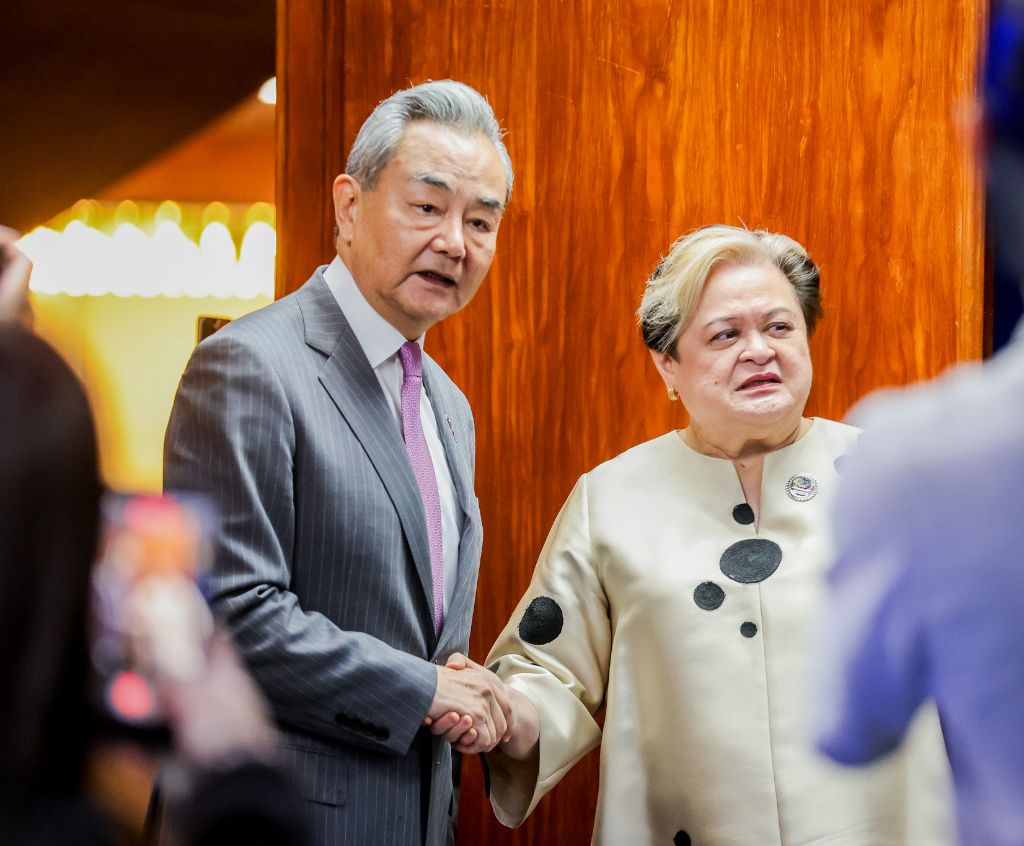
Chinese Foreign Minister Wang Yi, also a member of the Political Bureau of the Communist Party of China Central Committee, meets with Philippine Foreign Affairs Secretary Ma. Theresa Lazaro in Manila, the Philippines, July 22, 2026. [Photo by Guo Yige/Xinhua]
China has in recent years been the Philippines' largest overall trading partner and its primary source of imports. Bilateral trade consistently totals tens of billions of dollars annually, often exceeding $80 billion, with China typically ranking among the top three destinations for Philippine exports. Given their extensive economic ties, both sides have an interest in preserving peace and stability while properly managing their differences. Confrontation would serve the interests of neither Beijing nor Manila.
But when two quarrel, a third benefits. Aware of U.S. efforts to strengthen its presence in Southeast Asia, Beijing fears that Washington's long-term strategy is to use its regional allies as an instrument against China.
"I believe very much that the future and the story of the 21st century will be written in this region and by how events unfold here," U.S. Secretary of State Marco Rubio said at the ASEAN Post-Ministerial Conference with the U.S. in Manila, demonstrating Washington's growing focus on Southeast Asia.
Despite the Philippines being a U.S. ally, not all Filipinos share Rubio's views. During the U.S. secretary of state's presence in Manila, anti-U.S. protests broke out, condemning Washington's actions in Iran and calling Rubio a "war criminal."
Still, Rubio's rhetoric reflects U.S. policy in Southeast Asia. Rubio has been open about Washington's ambitions. With the United States remaining ASEAN's largest source of foreign direct investment, Rubio's announcement of a $2.5 billion investment in ASEAN highlighted Washington's continued economic engagement with the region. He said plainly that the U.S. was pursuing the initiative because it served American interests there.
Since the onset of Donald Trump's second term, Washington has made its global ambitions strikingly clear: from seeking to acquire Greenland and control the Panama Canal, to absorbing Canada as the 51st state. Similarly, it has made no secret of its intentions regarding ASEAN.
Regional observers therefore view the strengthening of the U.S. role in Southeast Asia, especially in the South China Sea, with caution. Chinese Foreign Minister Wang Yi urged the United States to "respect China's core interests" and "effectively manage differences, letting this year of opportunity for China-U.S. relations become a reality."
Wang's meeting with Rubio in Manila suggests room remains for dialogue and cooperation between the two countries despite their broader geopolitical differences.
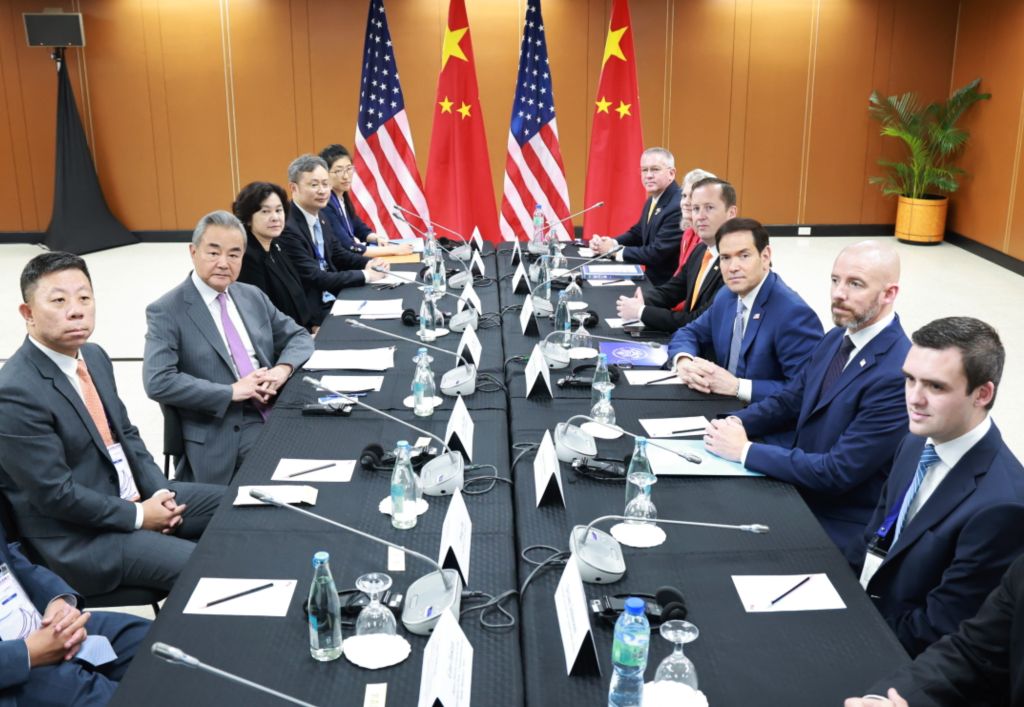
Chinese Foreign Minister Wang Yi, also a member of the Political Bureau of the Communist Party of China Central Committee, meets with U.S. Secretary of State Marco Rubio in Manila, the Philippines, July 22, 2026. [Photo by Li Meng/Xinhua]
From Beijing's perspective, external powers should not turn Southeast Asia into an arena for strategic competition or pressure regional countries to choose sides. ASEAN leaders appear to share this view, having repeatedly called for a regional environment based on dialogue and cooperation rather than confrontation.
The main message from the meeting between Wang and ASEAN foreign ministers in Manila was that ASEAN seeks deeper practical cooperation with China in trade, investment, the digital economy and other sectors. China, according to its top diplomat, has reached significant consensus with eight ASEAN countries on jointly building bilateral communities with a shared future, laying a more solid foundation for a closer China-ASEAN community with a shared future.
China has been ASEAN's largest trading partner since 2009. Last year, China-ASEAN bilateral trade volume exceeded $1 trillion, while growing investment and cooperation across sectors show the importance of the relationship to the region's economic development.
This year marks the 50th anniversary of the signing of the Treaty of Amity and Cooperation in Southeast Asia. China was the first major country to accede to the treaty. 2026 also marks the fifth anniversary of the establishment of the China-ASEAN Comprehensive Strategic Partnership.
It is therefore no surprise that Wang said Beijing "stands ready to work with ASEAN to deepen mutual trust, enhance mutual understanding and mutual support, safeguard the common interests of China and ASEAN, and uphold the legitimate rights and interests of the Global South."
ASEAN, with a total population of 678 million, making it the world's third-most populous region, and a combined gross domestic product of $3.9 trillion, places importance on deepening strategic cooperation with China. At the same time, stability is what the region needs most, as it allows ASEAN members not only to develop closer relations with each other but also to increase the organization's global impact. Such an approach could also allow the group to build closer ties with other major global actors.
Southeast Asia now stands at a crossroads, choosing between continued peace and prosperity or rising tensions and confrontation. However, South China Sea issues should not be allowed to become a stumbling block to China-ASEAN relations, and Southeast Asia should be allowed to preserve its tradition of strategic autonomy and balanced foreign policy while focusing on economic growth rather than great-power rivalry.
Nikola Mikovic is a freelance journalist in Serbia, covering mostly Russian, Ukrainian and Belarusian foreign policy issues.