中文
中文
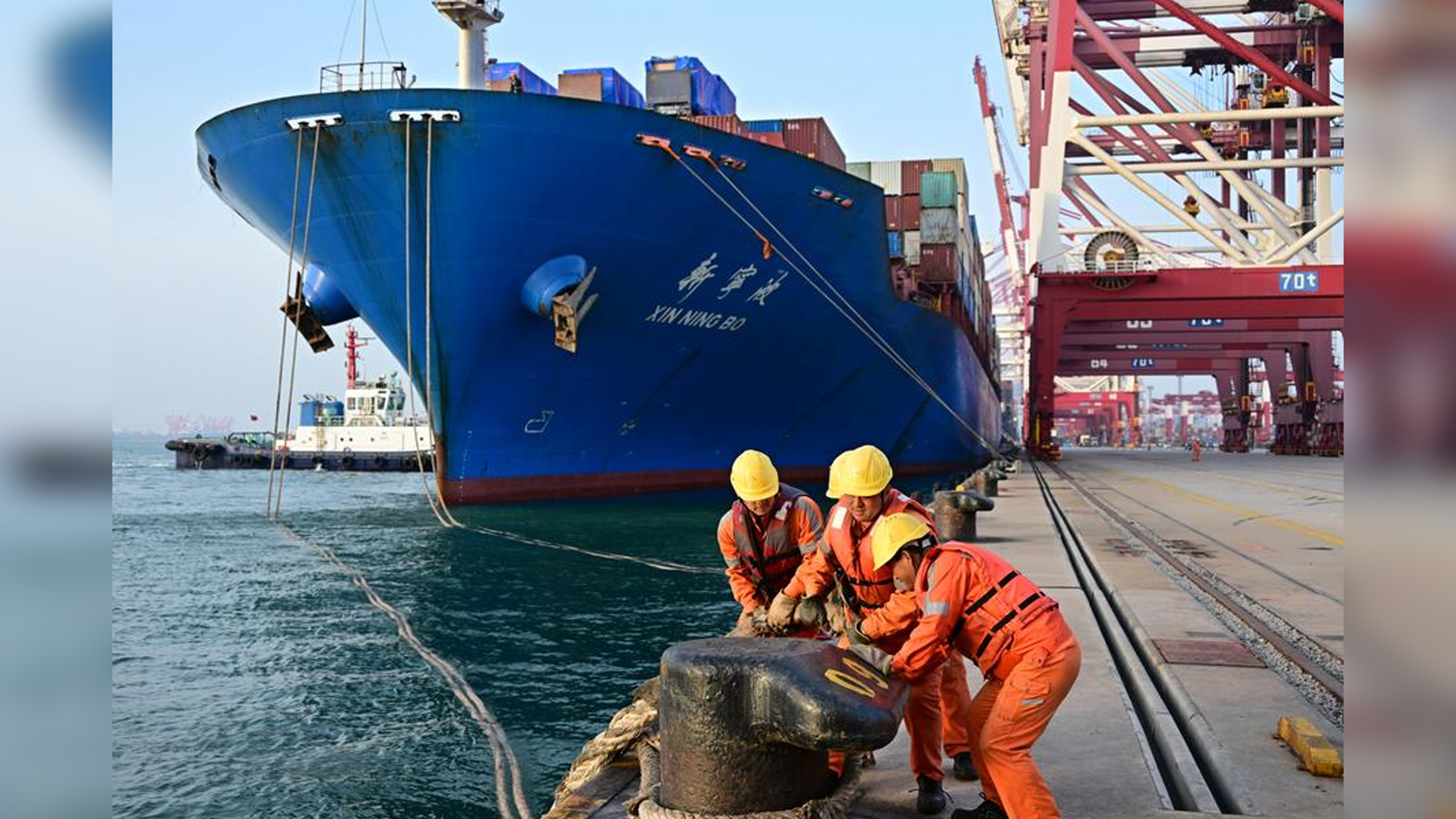
Workers cast off the ropes for a ship bound for ASEAN countries at a container dock of Qingdao Port in Qingdao, east China's Shandong Province, April 30, 2025. [Photo/Xinhua]
By Chen Guifang
If geopolitics were a referendum, Southeast Asia has just cast its telling vote. For the eighth year, the State of Southeast Asia survey posed a forced-choice question to the region's elites: Does ASEAN's future lie with China or the United States?
This year, 52% chose Beijing over Washington's 48%. That result, released last week by Singapore's ISEAS-Yusof Ishak Institute, reverses last year's narrow American lead and marks the third time in seven years that China has overtaken the United States in ASEAN's preference.
Consider the numbers from this respected gauge of elite opinion across the 11 members of the Association of Southeast Asian Nations (ASEAN). In Indonesia, 80.1% would lean toward China. In Malaysia, 68%; in Singapore, 66.3%; in Timor-Leste, 58.2%; in Thailand, 55%; and in Brunei, 53.5%. Most are America's treaty allies, its security partners, and the very nations that once looked to Washington as a stabilizer.
Correlation is not causation, and the survey does not ask respondents why they chose as they did. But the circumstantial evidence is suggestive. What has changed? The region's growing preference for China coincides with decades of consistent engagement that aligns with ASEAN's core aspirations: development and stability.
China has been ASEAN's largest trading partner for 17 consecutive years, and ASEAN has been China's for the last six years. In 2025, two-way trade crossed the $1trillion threshold, up 7.4% from the previous year. The Belt and Road Initiative in Southeast Asia has matured into a multi-layered framework: infrastructure as the backbone, trade and investment as the lifeblood, and the digital and green economies as new engines.
With 2026 marking the start of China's 15th Five-Year Plan and the implementation of the China-ASEAN Comprehensive Strategic Partnership Action Plan (2026-2030), this alignment is set to deepen, creating a range of shared opportunities.
Unlike Washington's penchant for unilateral moves, China's approach is rooted in its "five homes" vision: building a community of peace, tranquility, prosperity, beauty, and friendship. As Wang Huiyao, president of the Center for China and Globalization, notes, ASEAN's hard-won peace and prosperity owe much to China, a partner that champions cooperation over decoupling. A golden era of China-ASEAN ties, he says, is coming.
Top concern: US administration
Yet, if the first tale the survey tells is of ASEAN's pull toward China, the second is of its revulsion from America. In fact, the two may be two sides of the same coin.
The same survey asks the region's opinion makers and thought leaders a blunt question: Which geopolitical events most worry your government? The top answer, at 51.9%, is "the US leadership under President Donald Trump." That beats even global scam operations (51.4%) and is up from third place last year.
In Singapore, 76.8% cite the Trump administration as their primary anxiety; in Indonesia, 67.8%; in Laos, 52.9%. The numbers reflect a simple calculation: The more exposed a country is to American trade and global economic and strategic volatility, the greater its fear.
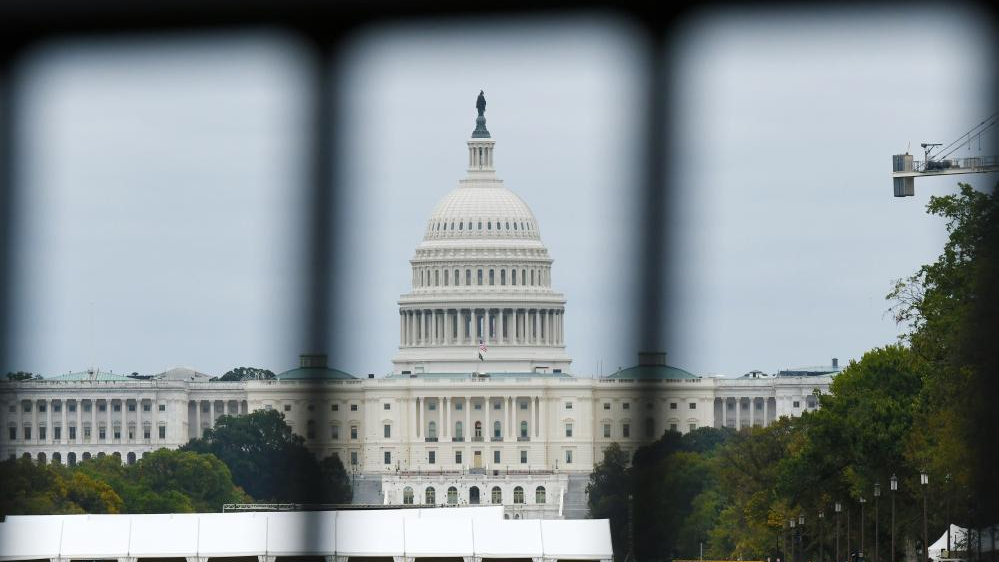
The US Capitol building in Washington, DC, the United States, October 12, 2025. [Photo/Xinhua]
What would worsen ASEAN's impression of America? The answer has shifted decisively from military to economic fears. Sanctions, tariffs, and other trade measures now top the list, at 43.4%, far ahead of interference in domestic affairs (21.3%) and support for Israel in the Gaza conflict (17.9%).
The concern is strikingly consistent, ranking first in most member states: Vietnam (60.6%), Timor-Leste (60.0%), the Philippines (50.0%), Singapore (50.0%), Myanmar (45.5%), Thailand (43.9%) and Malaysia (40.3%). The US administration's doctrine of maximum pressure has backfired spectacularly in a region built on open markets.
And then there is the Iran conflict. The survey missed it, conducted before America's strikes. Subsequent events, however, suggest that had the poll been taken later, the damage to Washington's standing would have been more serious still.
Malaysia's Prime Minister Anwar Ibrahim has condemned the strikes as "barbaric," adding that his country is "aware that when we speak the truth and defend justice, we may face consequences, including economic pressures arising from geopolitical developments and disruptions to oil supply and transport."
Southeast Asia is among the world's most reliant regions on oil and liquefied natural gas originating from the Persian Gulf, the flow of which has been disrupted by the Iran war. Across the region, from the Philippines to Indonesia, governments have implemented energy rationing and, in some cases, ramped up coal usage or reversed coal phase‑out plans. There is anger directed at Washington, which launched the strikes with Israel without consulting regional allies.
Yet, the survey also offers clues for a Trump administration that might wish to win back the region. When asked what would most improve relations with America, ASEAN elites gave a clear answer: respect international law and stop undermining the global system (38.5%). Next: pursue free trade, not punitive tariffs (24.9%). Then: respect sovereignty (19.6%).
Each of these is, by implication, a critique of the Trump administration, but also a mirror of what China already offers persistently, predictably, and patiently. The only question is whether Washington would listen.
Chen Guifang is a special commentator on current affairs for CGTN.